
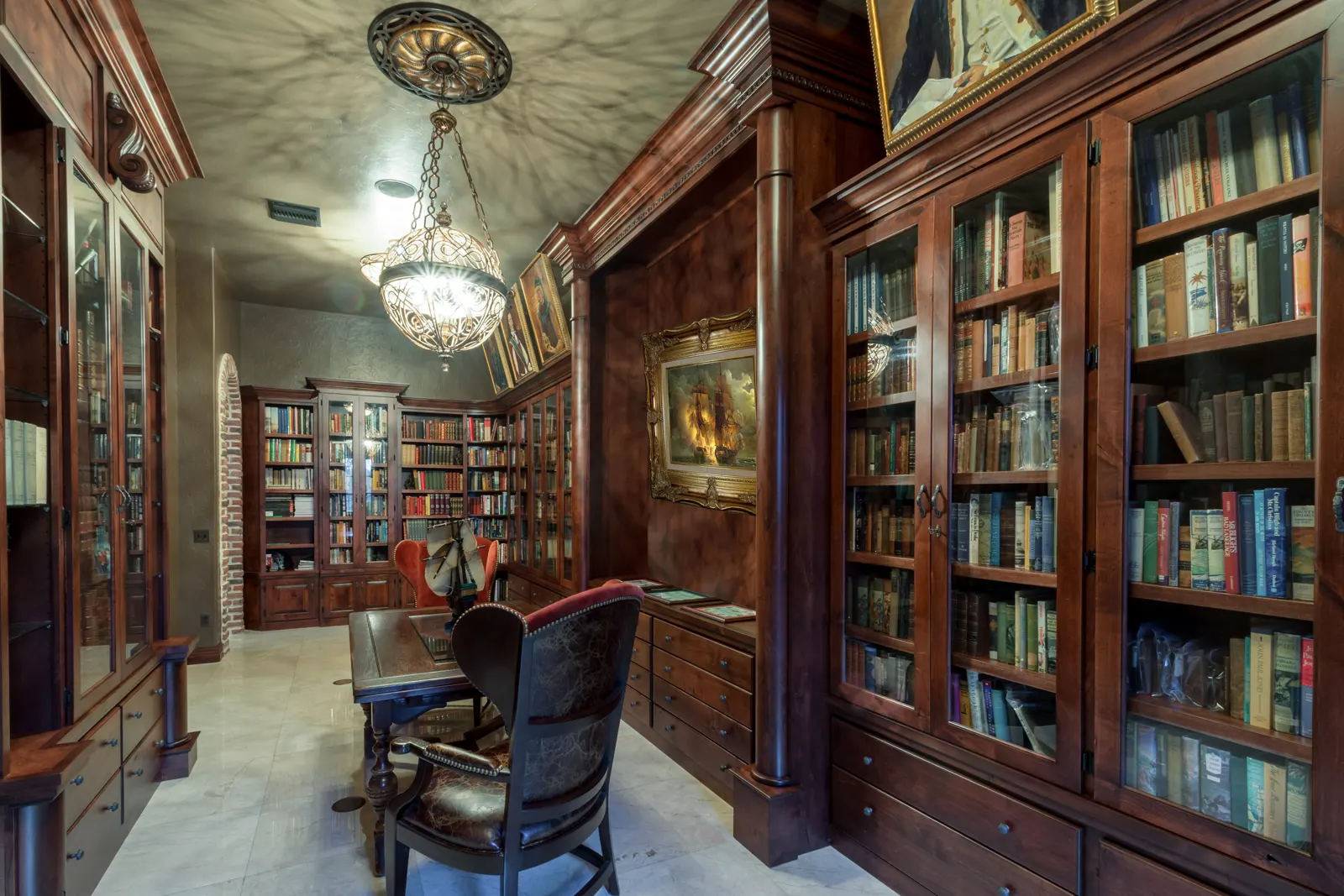
Tom Miranda Rare Book Vault
Piracy, bowhunting, trapping, mountaineering and occult
Welcome
The book collector.
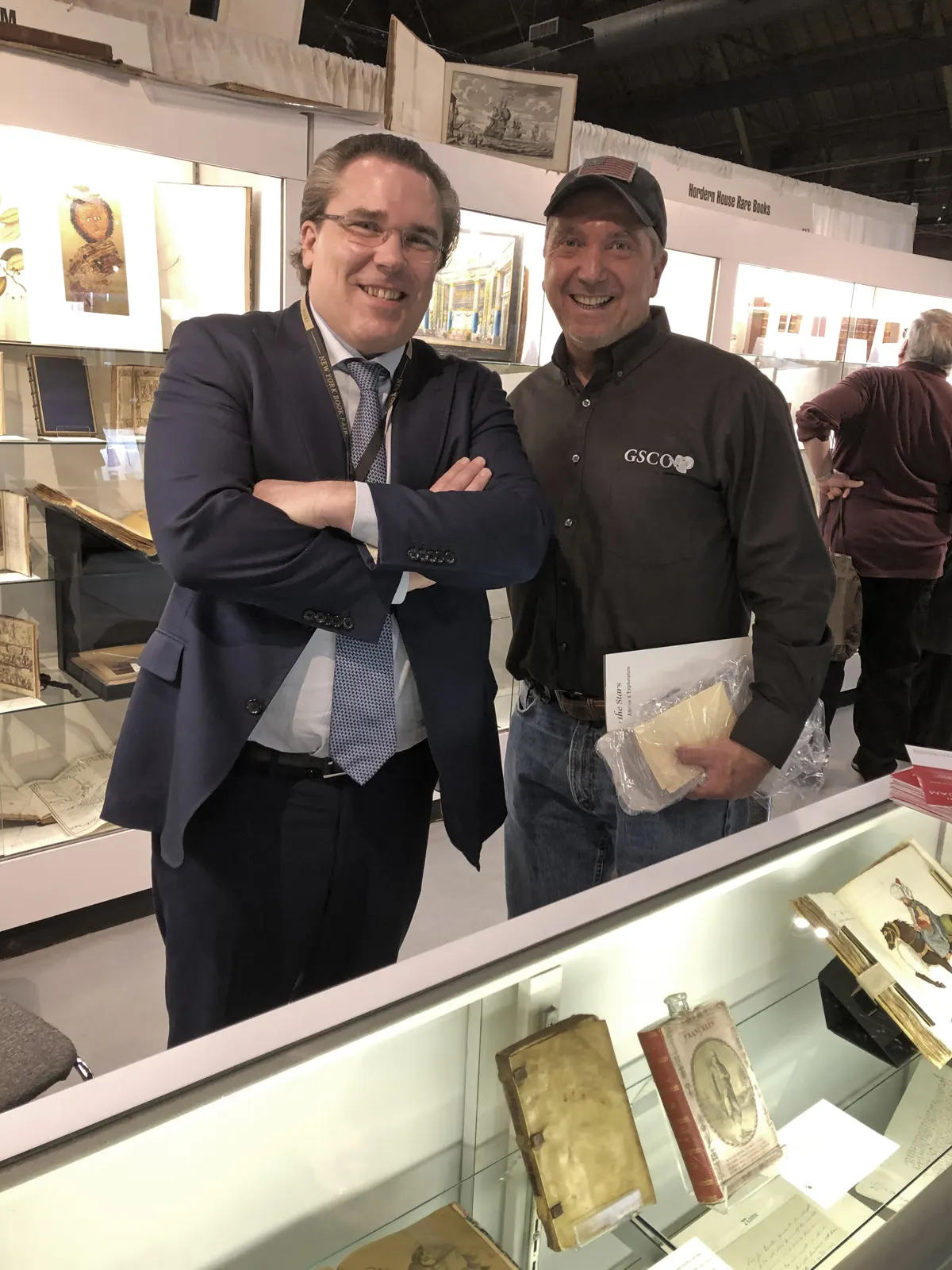
Many know me as a TV producer & outdoorsman, however few know I’m an avid book collector. While book collecting might be considered a boring, tedious or uninteresting hobby, I would quickly beg to differ. I have learned so much through reading old books and collecting books from the topics of my passions that not a day goes by that I don’t think of my library or searching out a rare title to add to the shelves. It’s been my experience as one gets older, there’s a tendency to lean toward the finer things of life, reflecting on history and one’s passions. And books are an amazing window into the past, as well as physical pieces of history themselves.
In recent years & months I have purchased several private book collections and been searching through my shelves cataloging and archiving them digitally. I have come to find many books of which are duplicates or even in some cases triplicates, to the point that I have decided to place some of my books on the market for sale & they will be listed a couple at a time in my web store.
The genres I collect are piracy, bowhunting, trapping, mountaineering and occult. If you’re looking for a specific book, message me. If you would just like to have a book from my library in yours, watch my store for the Tom Miranda Library copies. All books sold from my library include my bookplate & signature.
Book collecting has brought me so much pleasure that it’s my hope that this tab brings more book enthusiasts into the ranks of collecting. For the sake of novices & those new to collecting, I have added tips and information here to help in understanding what to look for when purchasing a book, as well as book terminology and some of the pitfalls to avoid in book collecting.
Thanks for being here and welcome to my Rare Book Vault.
Looking for a specific title? Message Tom at tom@tommiranda.com.
Types of book collectors
While there are many reasons why people collect books, most collectors fall into 3 categories.
1. Novel collector
The novel collector is a person who enjoys reading novels. These collectors often prefer fictional books as well as biographies and usually start out purchasing new books but soon begin to dabble in used novels, often collecting the more famous books like Gone With the Wind, The Maltese Falcon, Dracula and of course many, many others.
2. Genre collector
This type of collector is a person who has a strong interest or passion in a particular genre and begins buying books to learn about the subject. Soon the interests turn to the history of the genre and then books by others in the genre. An example would be sports books with, say, a specific interest in baseball. These collectors may start with new books about players and eventually turn to used books about players, teams, rule books and any number of related topics from bat manufacturing books to how baseball gloves are made.
3. Intellectual collector
Scholars, researchers, professors, lawyers and doctors often collect books in their specific area of expertise. Again, these collections start as text and research books, then move into the history and texts written by the icons of their field. An astronomer might collect not only books about astronomy, but books about physics, chemistry, Einstein, Hawking and others.
Book specifics
Books are graded based on several key factors.
1. True first edition
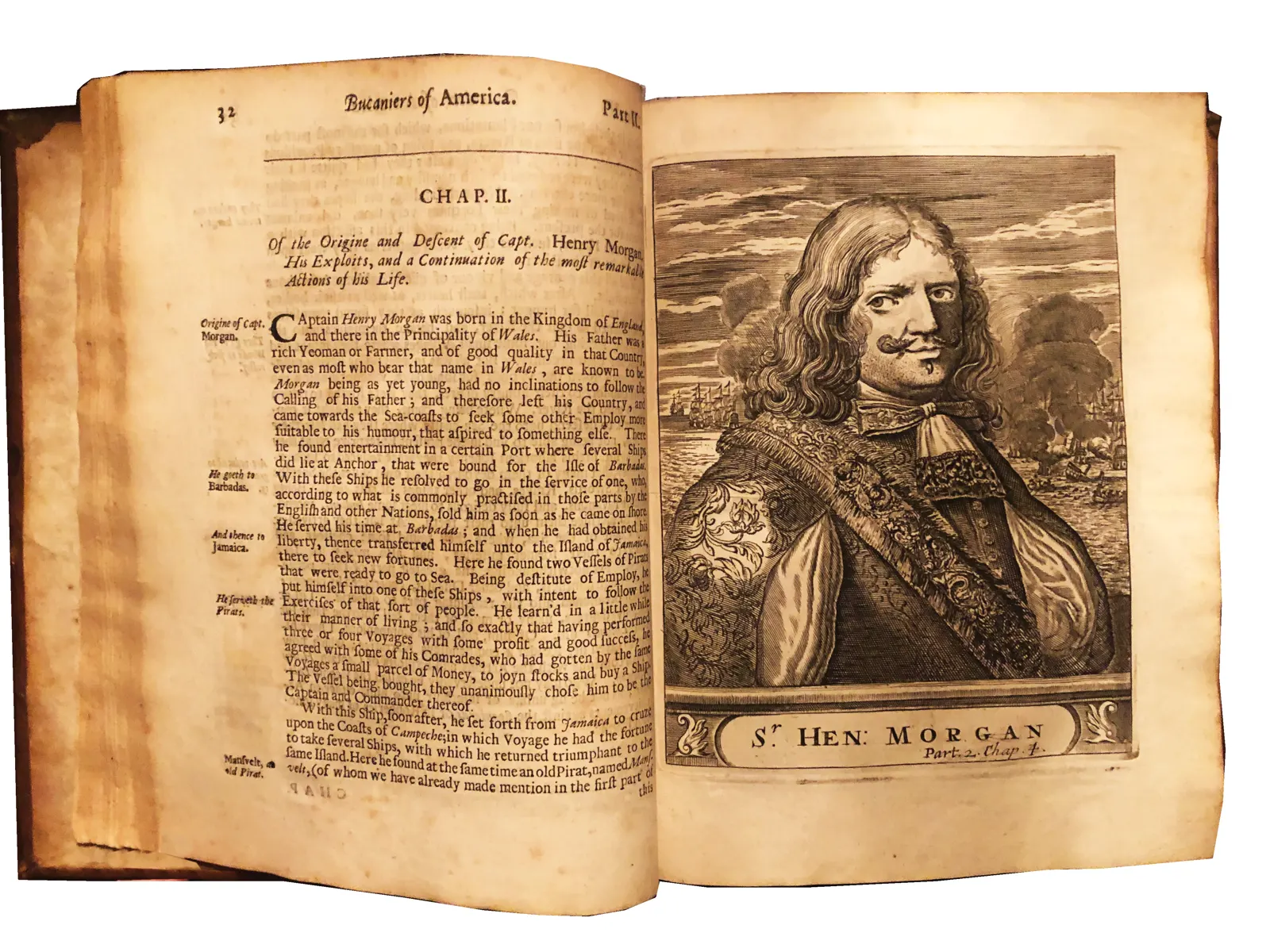
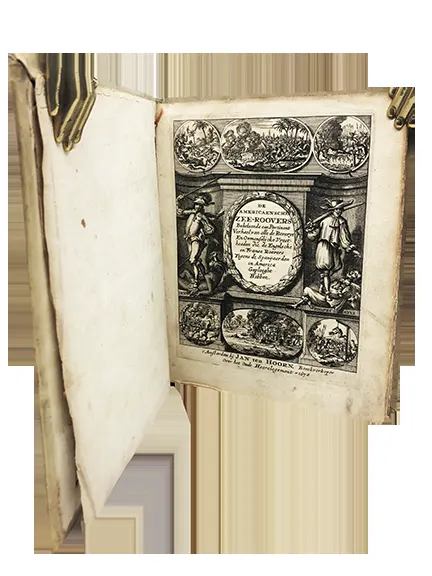
Typically the most valuable books will be the most scarce. Often these are the true first editions. A True First Edition means it is the absolute first time the book was ever in print. Older books written in English were often printed in England, but there can also be first editions printed in other languages. A great example from my collection is the Buccaneers of America. The First True Edition was printed in Dutch in 1678. The first Spanish edition came in 1682, the first English in 1684, French in 1686 and so on. Typically the old English books are the most valuable to collectors from the USA, because most want to collect books they can read & not many people speak French or Dutch. However, die-hard collectors often look to find the True First Edition in any language and then the first edition in English.
2. Complete copy
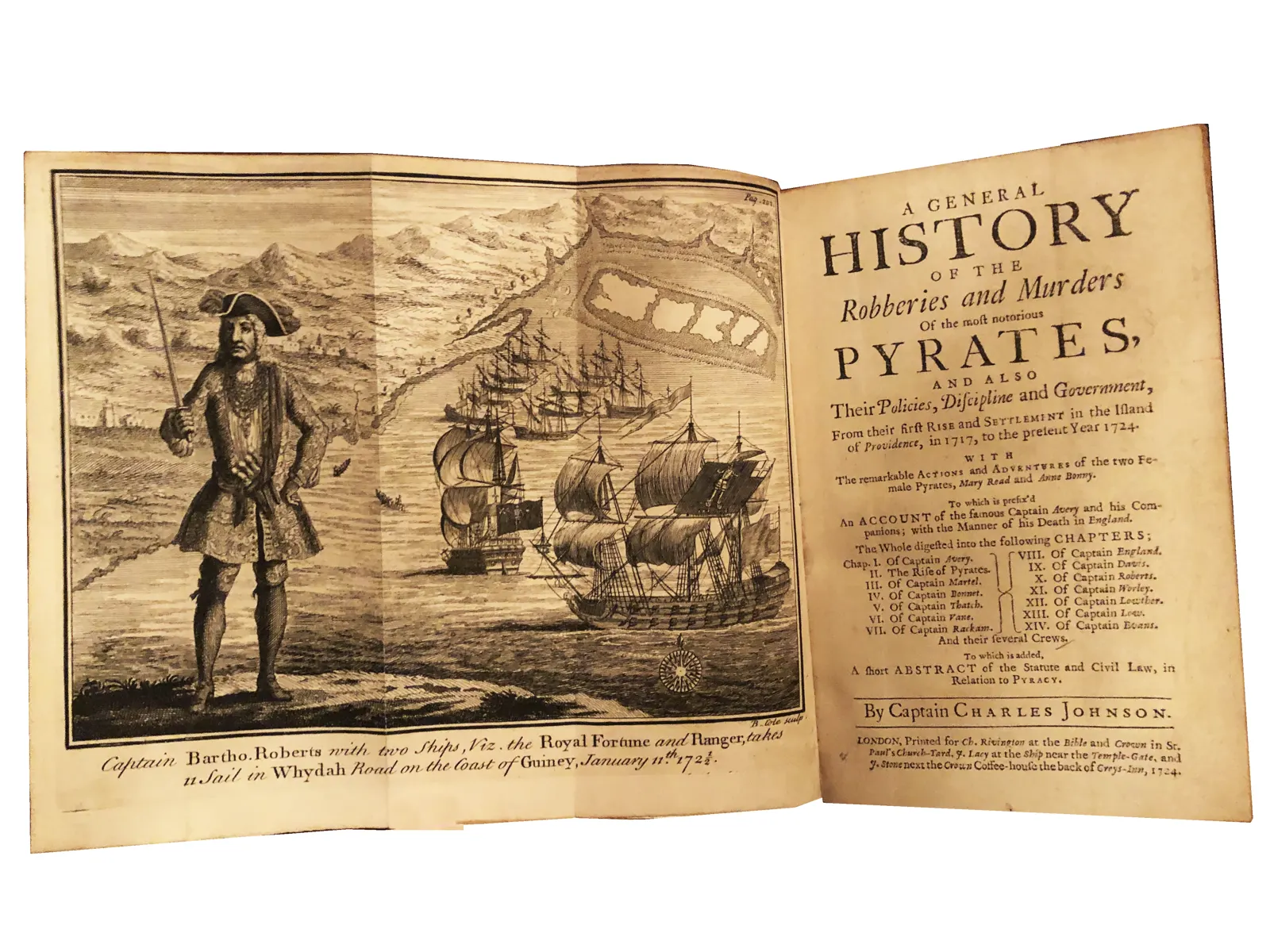
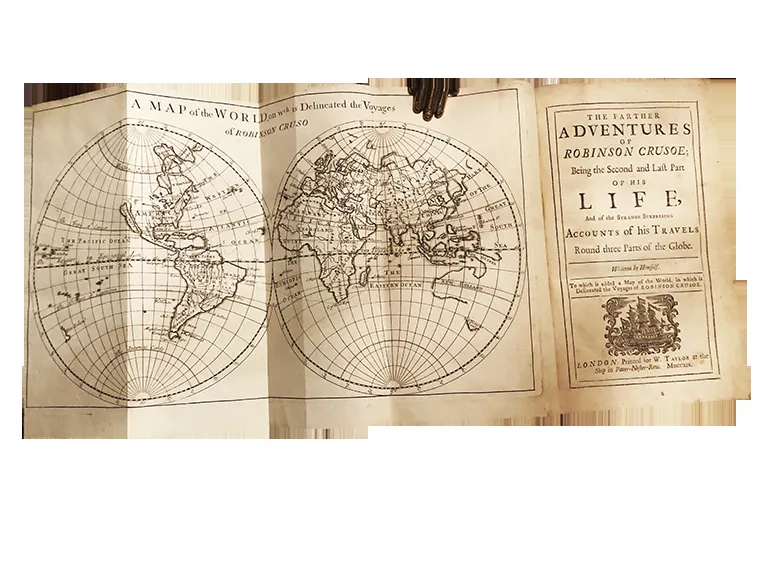
Collectors must always look to verify that a book is complete. Old books can often be missing key pages. This can be something as simple as end papers or as extreme as the title page or maps & plates. Of course an incomplete book is priced less than a complete copy and as such will never reach the full value of a complete copy. It’s not uncommon for a collector to purchase an incomplete copy of a very rare book and use that book as a placeholder in a collection until a complete copy becomes available and is secured. In early books maps were occasionally left out of some books. Also in the old days, family members with no interest in books inherited libraries and often these books were stripped of the maps and plates, which were framed for display in homes or sold. In very rare books, incomplete copies are often bought by collectors in hopes that another incomplete copy will be found and the two books combined to form a “made-up” yet complete copy.
3. Provenance
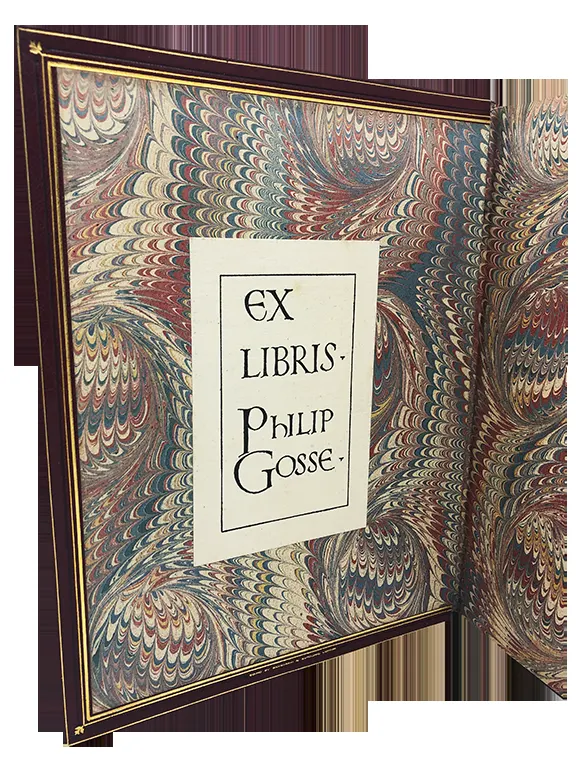
Provenance covers the previous ownership of the book. Famous people, dignitaries, kings, queens and castle libraries all affect the value. An example would be an astrophysics book from Stephen Hawking’s library or a bowhunting book from Fred Bear’s collection, which would be more valuable than just another copy. Provenance is often tracked by owner bookplates that are affixed inside the book, or owner signatures within the book.
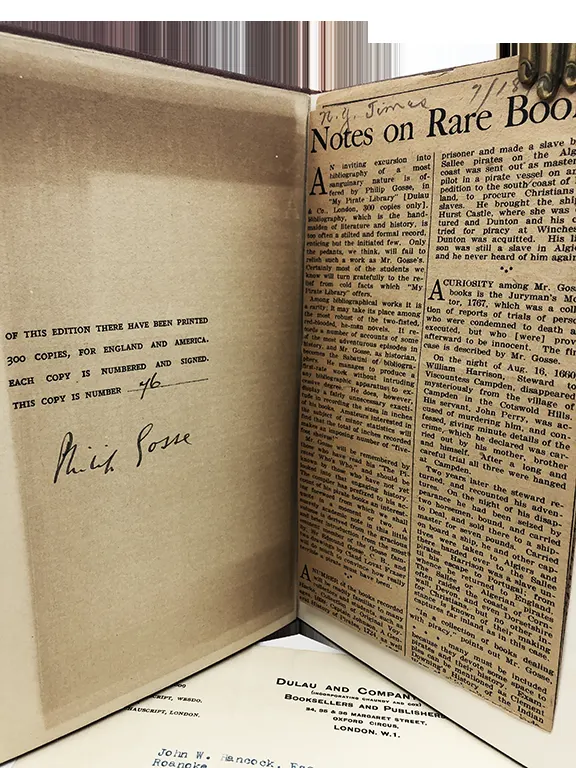
4. Book value
The value of any book is determined by many factors. First & foremost is the market. Some genres are just more desirable than others. Complete books in fine condition will always rate the highest values within their particular genre. Author-signed books add value. Provenance adds value. Rarity adds value. Thus, a fine copy of a 1599 English Holy Bible, once in the collection of Pope Clement the 8th with the Papacy bookplate and Clement’s signature, would likely be the most valuable 1599 Bible on the planet.
5. Collector mentality
As collectors acquire books in their specific genre they inevitably begin to run into books that are hard to find. Some books become elusive, and when a quality copy appears in the market, its value skyrockets depending on the rarity and the number of collectors who need it for their “missing piece of the puzzle.” I have paid stupid money for some rare books to “fill a hole” in my collection and been “out gunned” by others who were willing to pay more to add “that” book to their collection. Often collectors find incomplete or low-grade copies and acquire them to fill a hole in the collection. Yet these collectors are always on the lookout for a better copy, a complete copy, a copy with provenance or a signed copy. Most collectors desire to put together the finest and most complete compilation of books they can afford in their genre.
Condition and grading
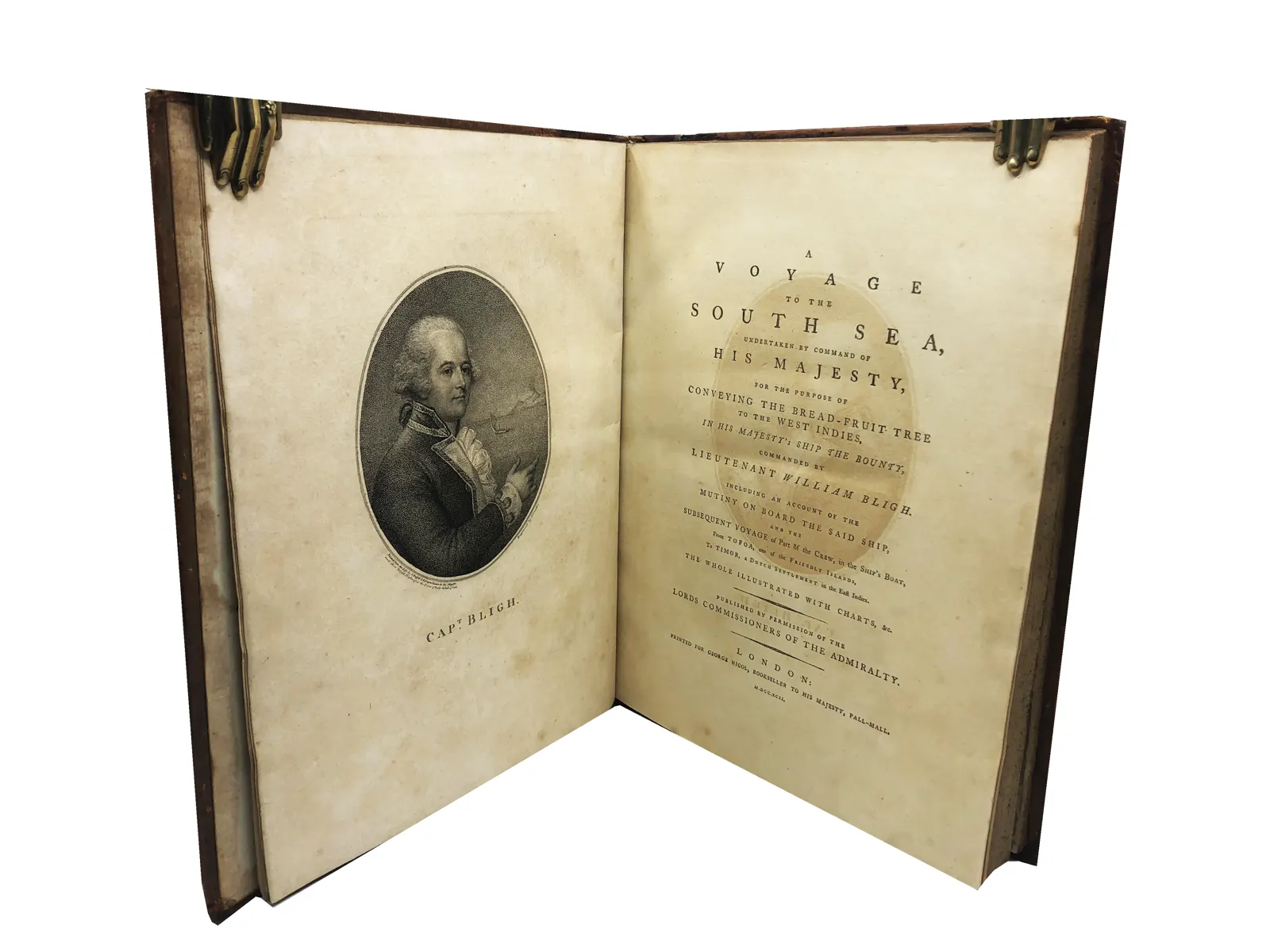
Condition refers to the quality of the book’s binding and pages. The Independent Online Booksellers Association (IOBA) uses the below classification scale.
- As new; fine
- Without faults or defects.
- Near fine
- A book approaching fine (or as new) but with a couple of very minor defects or faults, which must be noted. Near fine plus has fewer defects, near fine minus has more.
- Very good
- A book showing some signs of wear. Any defects or faults must be noted.
- Good
- The average used book that is totally complete (as issued) and intact. Any defects must be noted.
- Fair
- A worn book that has complete text pages (including those with maps or plates) but may lack endpapers, half-title page, etc. Any defects or faults must be noted.
- Poor or reading copy
- A book that is sufficiently worn that its only merit is the complete text, which must be legible. Any missing maps or plates must be noted. May be soiled, scuffed, stained, or spotted, and may have loose joints, hinges, pages, etc.
- Ex-public library
- Must always be designated as such no matter what the condition of the book.
- Book club
- Must always be noted as such no matter what the condition of the book.
- Binding copy
- A book in which the text block, including illustrations, is complete but the binding is lacking, or in such poor condition it is beyond realistic restoration efforts.
- Remainder marks, bookplates, previous owner’s name
- These should always be noted, if they apply.
Condition glossary
Below are some terms used to describe specific book faults and defects.
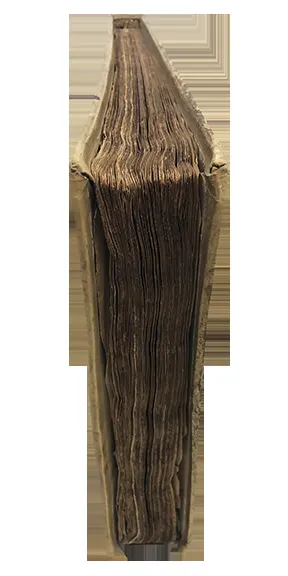
- Bowed
- A condition of the covers or boards of a hardcover book. Bowed covers may turn inward toward the leaves or outward away from the leaves. The condition generally results from a rapid change in the level of moisture in the air and is caused by different rates of expansion or contraction of the paste-down and the outer material covering the board.
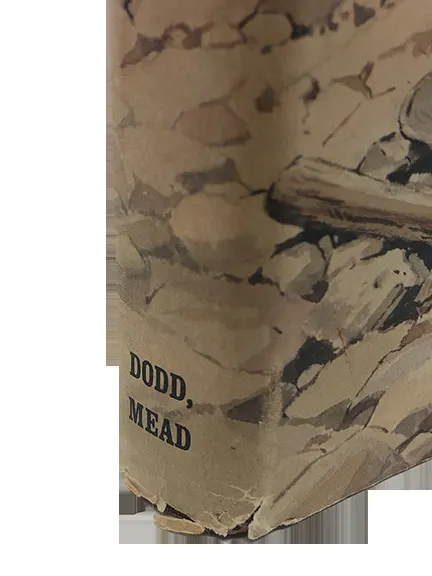
- Chipped
- Used to describe where small pieces are missing from the edges of the boards or where fraying has occurred on a dust jacket or the edge of a paperback.
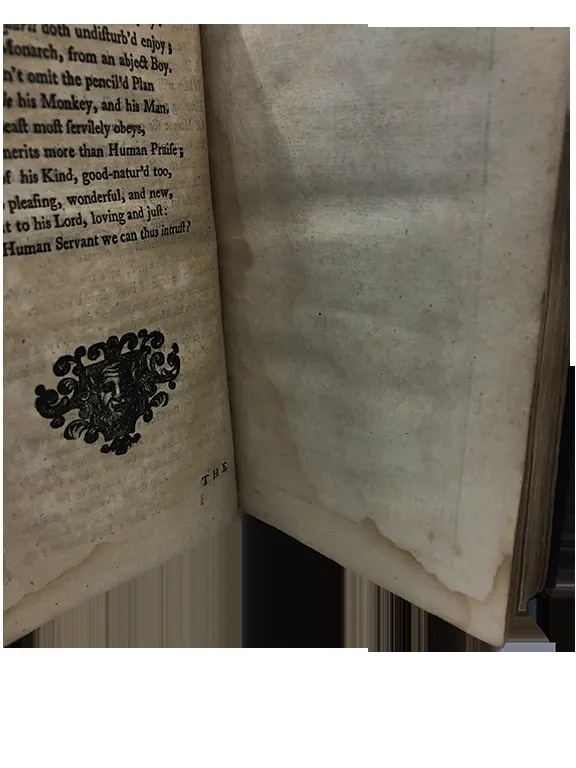
- Damp-stained
- A light stain on the cover or on the leaves of a book caused by moisture such as a piece of food or perspiration. Generally not as severe as water stains.
- Darkening or fading
- When book covers are exposed to light, the color darkens or becomes more intense. See also sunned.
- Edgeworn
- Wear along the edges of hardback book covers.
- Ex-library
- The book was once owned by, and circulated in, a public library. This book could well be in any of the above general categories but more often than not has been well used. May have library stickers, stamps, or markings. Any former library book must be marked ex-library.
- Foxing
- Brown spotting of the paper caused by a chemical reaction, generally found in 19th century books, particularly in steel engravings of the period.
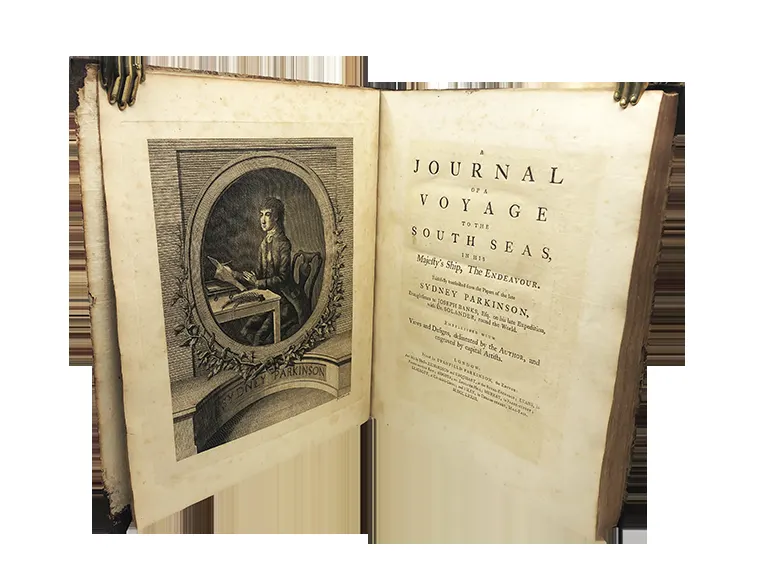
- Loose
- The binding of a new book is very tight; that is, the book will not open easily and generally does not want to remain open to any given page. As the book is used, the binding becomes looser until a well-used book may lay flat and remain open to any page in the book.
- Made-up
- A copy of a book whose parts have been assembled from one or more defective copies.
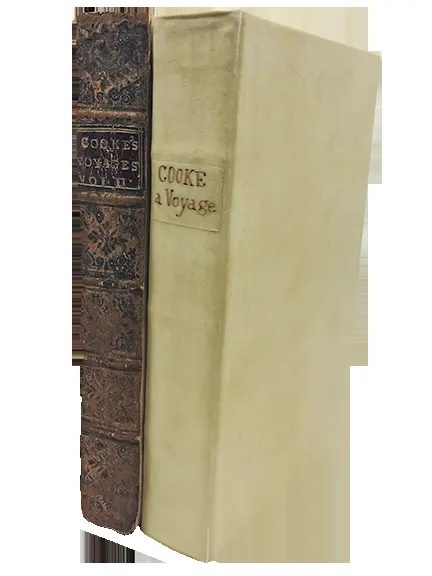
- Price clipped
- The price has been clipped from the corner of the dust jacket.
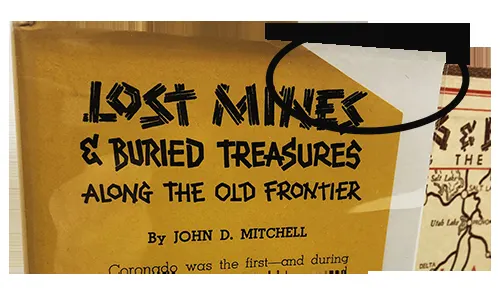
- Re-backed
- A book that has been repaired by replacing the spine and mending the hinges.
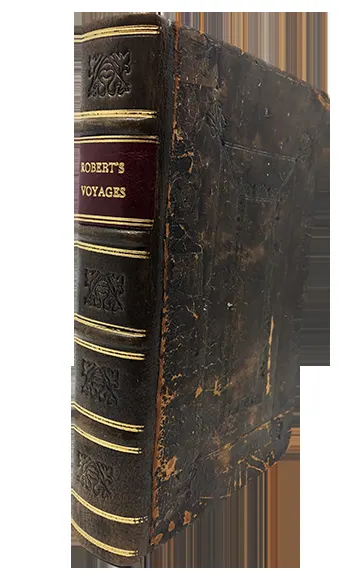
- Re-cased
- A book that has been glued back into its covers after having been shaken loose.
- Re-joined
- Means the book has been repaired preserving the original covers, including the spine.
- Shaken
- An adjective describing a book whose pages are beginning to come loose from the binding.
- Shelf wear
- The wear that occurs as a book is placed onto and removed from a shelf. It may be to the tail (bottom) edge of the covers as they rub against the shelf, to the dust jacket or exterior of the covers (when no dust jacket is present) as the book rubs against its neighbors, or to the head of the spine which some use to pull the book from the shelf.
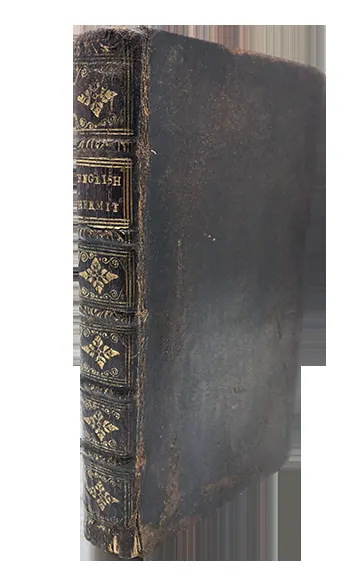
- Sunned
- Faded from exposure to light or direct sunlight.
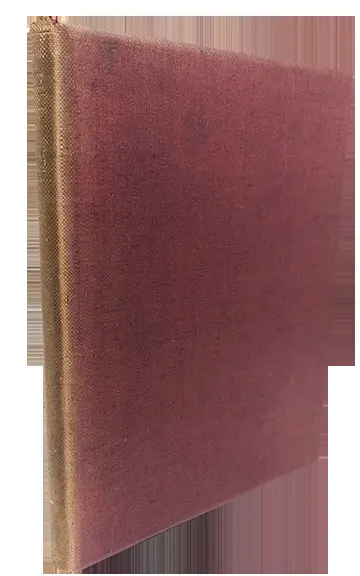
- Tight
- The binding of a new book is very tight; that is, the book will not open easily and generally does not want to remain open to any given page. As the book is used, the binding becomes looser until a well-used book may lay flat and remain open to any page in the book.
- Trimmed
- An adjective indicating that the pages have been cut down to a size smaller than when originally issued.
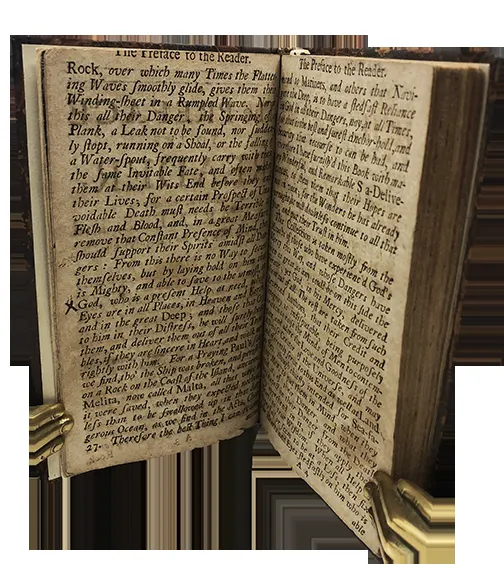
- Unopened
- The leaves of the book are still joined at the folds, not slit apart.
- Working copy
- Even more damaged than a reading copy, the working copy will have multiple defects and may even need repair.
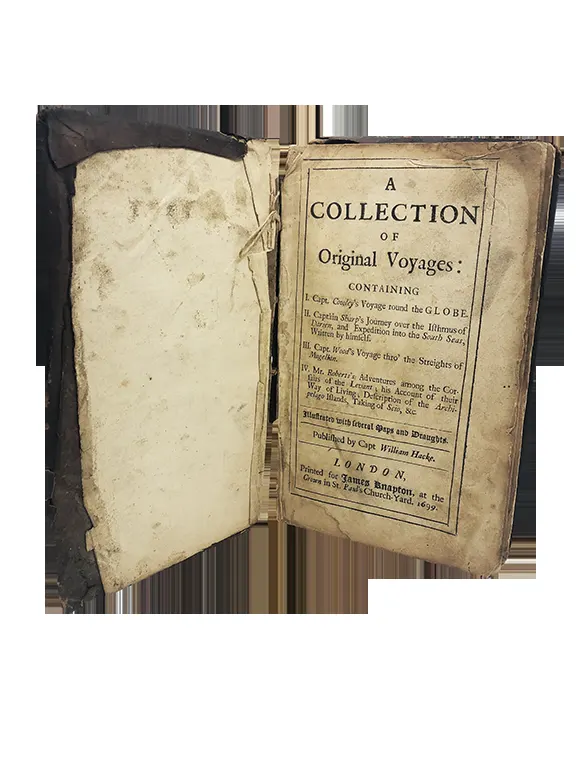
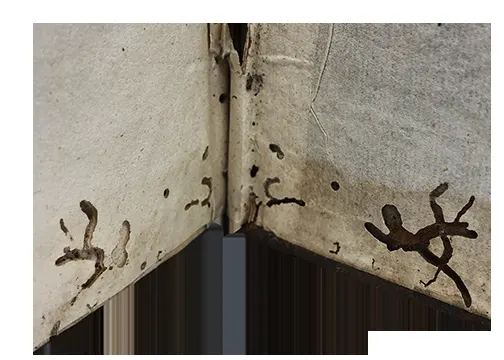
- Worming
- Worm holes: small holes resulting from bookworms (the larvae of various beetles).
Book collecting pitfalls
The biggest mistake that most book collectors make early in their collecting is not staying focused. The best collections are intricate & complete within a genre. An example would be if your interest is hunting books and you bought a fishing book. Now your collection would be moving toward the subject of outdoor books. It’s even better if you focus on a specific style of hunting and decide to collect only bowhunting books. Of course all this being said, there’s nothing wrong with collecting books in 2, 3 or more genres as long as your book buying budget can support such a hobby!
Another mistake is looking for books on sites such as eBay, Etsy or Craigslist. Often books sold on these sites are not described correctly and often have flaws, missing plates or maps. Or you can get caught up in an auction and pay too much. Now that’s not to say that some excellent deals on great books can’t be found in these online auctions and I look under every rock for a good book and a deal. A good rule of thumb is to check the book trade sites and online stores.
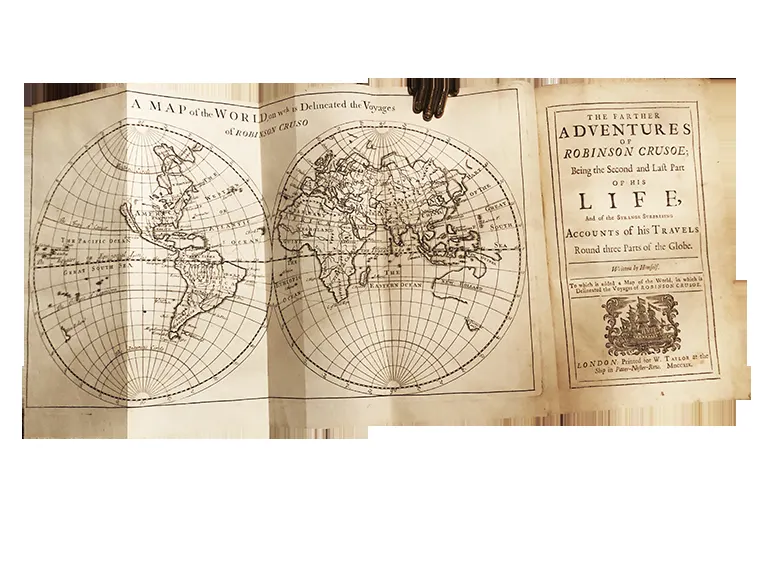
Impulse buying is another book buying trap that’s easy to fall into, especially if you have been looking for a book for a while and then suddenly think you’ve found it. Stop, take a deep breath and research the book. Know the year and the printer of the true first edition. Know the number of maps and plates. Know if there should be a second half-title page. In other words, know what you’re looking for and make sure this book has it. And if it doesn’t, use the missing elements to barter the price lower if the book is still of interest to you.
Investment collecting
Let me say right here, right now, that if you collect the right books and buy them at the right price, there’s a good chance that their value will increase and you will make money when you resell them. Rare books in VG condition, signed books and books in preferred genres all will increase in value over time. Most collectors don’t start collecting books with the thought that they will sell their collection later, but like the old saying goes, “You can’t take it with you.” The reality is that eventually the books will be resold, if not by you then by your heirs.
With this in mind it’s a good idea to keep a spreadsheet on your collection and note the year and price paid for each book of the collection. This information will keep a good running tally of the money you have spent on the collection (investment) as well as a basis to start from if you were to sell. Most expensive books are sold at book auctions done by the major auction houses like Christie’s, Sotheby’s, Heritage, Invaluable and others. These auction houses often charge high commissions, yet also will bring in the wealthiest bidders. If you have top books in a top sale, chances are you will profit and the books will find a good home, albeit the collection will be split up.
Collections
The origins in which one begins collecting are different for everyone. My earliest book collecting consisted of small “how to trap” booklets. Most were self published by the authors and were short, illustrated treatises of their individual trapping methods. I eventually wrote several of these type books myself.
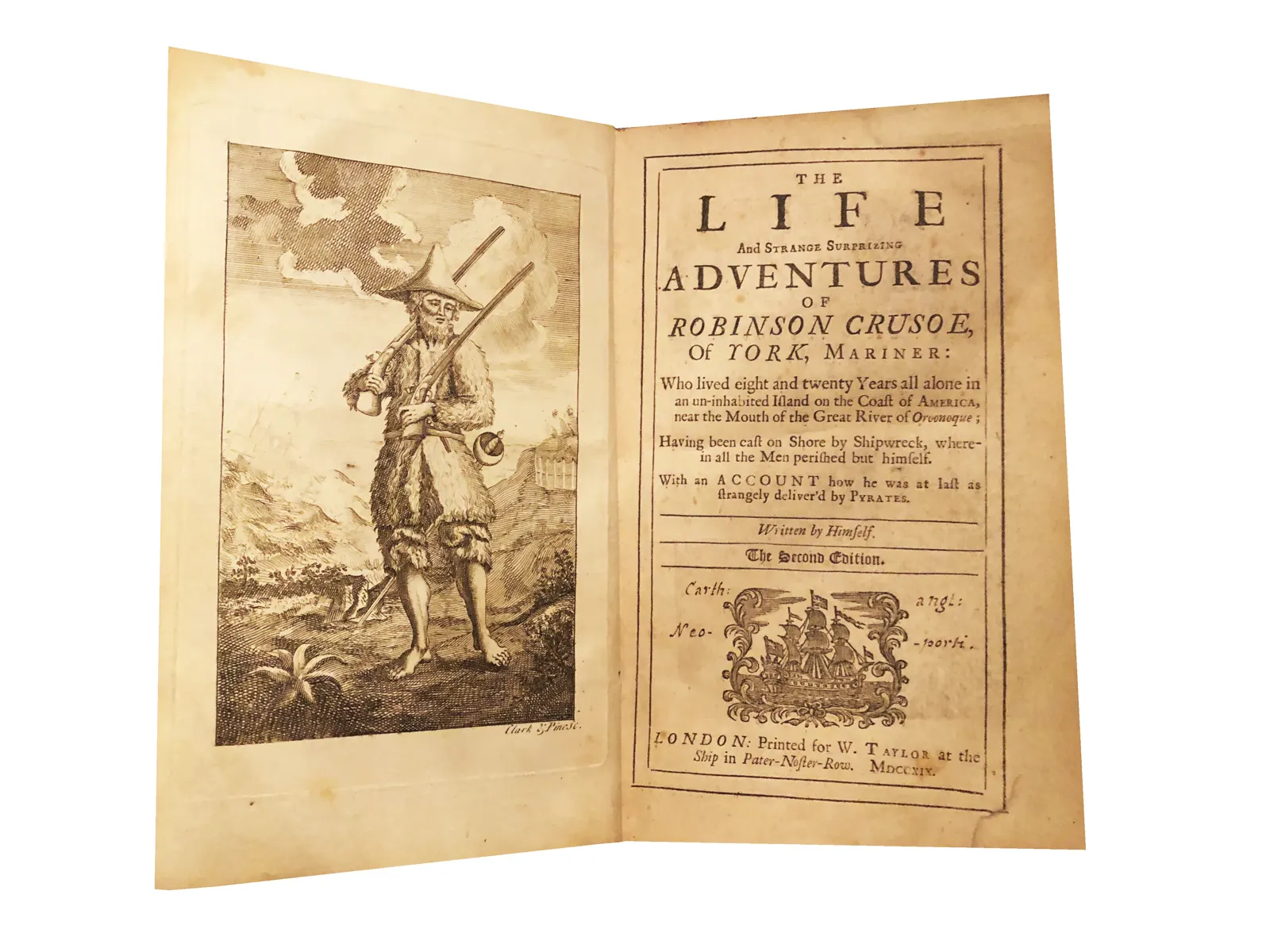
Yet the catalyst that kicked me into “full on” book collecting was visiting a website which showcased a rather extensive pirate book collection. I had an interest in pirate related books and materials and this website opened my eyes to the vast wealth of knowledge available on pirates and piracy, both historic and fiction. In fact I eventually bought that collection, which was the base for my collection on pirates. This eventually spread to shipwrecks, treasure hunting and voyages of exploration.